Loading...
Serving Normal, IL and surrounding areas. (309) 791-9230
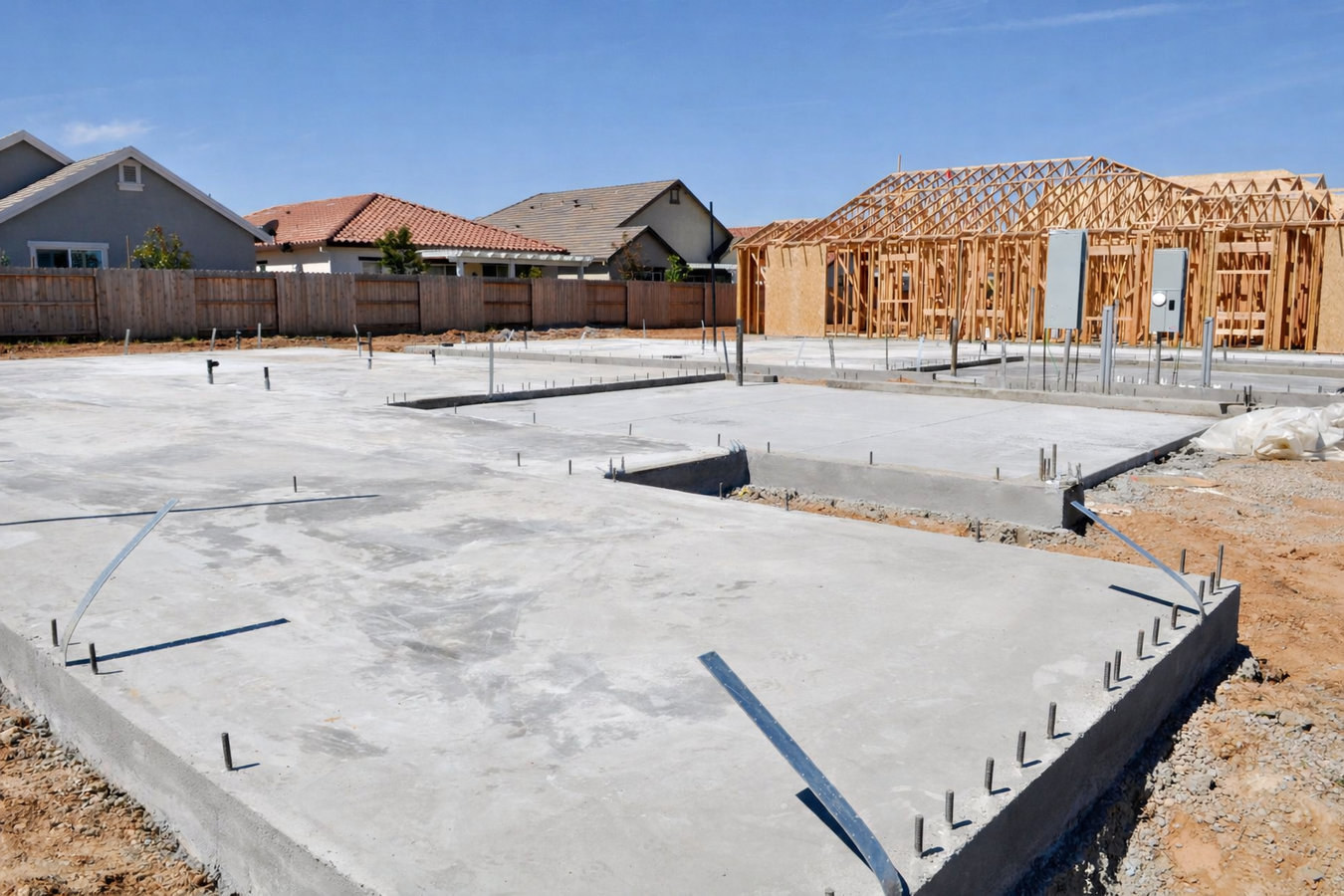
New foundations for Normal homes and additions - excavated below frost depth, reinforced, waterproofed, and fully permitted before work begins.
Foundation installation in Normal covers excavation below the local frost line, forming and reinforcing the concrete structure, waterproofing the exterior, and installing perimeter drainage - a straightforward slab takes two to four days to pour and finish, while a full basement foundation typically runs one to two weeks from excavation to backfill.
The foundation is the part of your home that everything else depends on. Walls crack, floors shift, and doors stop closing properly when it moves - and in Normal's clay-heavy soil, the wrong design will move. Getting the depth, drainage, and reinforcement right before the concrete is poured is the only opportunity you have to do it correctly. For new construction where only a ground-level slab is needed, we also handle slab foundation building as a focused scope without the full basement wall framing.
Diagonal cracks spreading from the corners of windows or door frames - especially in basement walls or on the exterior - are often a sign the foundation is moving unevenly. In Normal, the clay soil beneath many homes expands and contracts with the seasons, and over years that movement can cause the foundation to shift. A crack you can fit a quarter into is worth having evaluated.
When a foundation settles or shifts, the frame of your home moves with it. Doors and windows are often the first place you notice it - a door that drags on the floor, or a window that suddenly sticks after opening fine for years. This is common in older Normal neighborhoods where foundations predate modern drainage standards.
Normal's clay-heavy soil does not absorb water quickly, so after heavy rain water can sit against your foundation for hours or days. Over time that moisture finds its way into cracks and pores in the concrete, weakening it from the inside. If you regularly see pooling within a foot or two of your foundation after rain, the drainage and foundation condition are worth evaluating.
Stand in your basement and look at the walls straight on. They should be flat and vertical with no curves or bulges. A wall that leans inward or has a visible bow in the middle means the soil pressure outside is winning. This condition can worsen quickly and is not something to monitor and wait on.
We handle foundation installation for new construction, home additions, and replacement projects across Normal. Every job starts with the permit from the Town of Normal, then proceeds through excavation, base preparation, forming, reinforcing steel placement, the pour, and waterproofing before any backfilling happens. For simpler new builds where a ground-level slab is the right choice, we handle that scope under slab foundation building as a focused project. When the plan calls for a full basement or crawl space, we form and pour the walls as well, applying a waterproofing membrane to the exterior and installing perimeter drain tile before the soil goes back in.
For projects in Normal's older established neighborhoods - especially those near Illinois State University where some homes have foundations reaching the end of their useful life - we can assess whether the existing structure warrants repair or whether a full replacement on correctly prepared ground is the more cost-effective path. When isolated load-bearing points are part of the design, we coordinate the foundation work with concrete parking lot building or surface flatwork as part of a single project scope so grade transitions are handled correctly.
For new homes, additions, and accessory structures in Normal - excavated and formed to local frost depth and soil requirements from the start.
For projects requiring usable below-grade space - includes excavation, wall forming, waterproofing, and drain tile installation.
A foundation type suited to lots where a full basement is not needed but a dirt-floor slab is not the right fit either.
For older Normal homes where the existing foundation has deteriorated or shifted beyond repair - assessed, permitted, and rebuilt correctly.
Normal sits in McLean County on glacial clay soil that holds water and moves with every wet and dry cycle. The frost line in this part of Illinois reaches roughly 42 inches - any footing placed above that depth will be pushed up and down by the ground freezing and thawing every winter, eventually cracking the structure above it. These are not edge cases. They are the normal operating conditions for any foundation in this part of the state, and they require a design and construction approach that accounts for both. Contractors who have only worked in milder climates or sandier soil will not automatically build in the measures this area requires. The National Association of Home Builders and the Portland Cement Association both publish standards for residential foundation work in frost-prone climates.
We serve homeowners throughout the Normal area, including those in Champaign and Bloomington. Whether your project is a new build in one of Normal's newer north-side subdivisions or a replacement foundation on a lot that has been in your family since the 1960s, the soil and climate conditions are the same - and so is the standard of work we bring.
We schedule a property visit before quoting. We look at the foundation type your project requires, lot access, and soil conditions - all of which affect the price. You will receive a written, itemized estimate within one business day of the visit.
Once you approve the estimate, we apply for the required permit from the Town of Normal. Permit processing typically takes a few days to a couple of weeks. We handle all paperwork and will notify you once the permit is issued and work is scheduled.
The crew excavates to the required depth, compacts the base, places rebar inside the forms, and pours the concrete. For a basement foundation, the Town of Normal inspector visits before the pour to verify the reinforcing is correctly placed.
After the pour, we apply waterproofing and drainage before any soil goes back in. You can walk the site and inspect the work before backfilling begins. Once the Town of Normal issues the final inspection approval, you receive the documentation for your records.
Free site visit. Written estimate within one business day. No commitment required.
(309) 791-9230Every foundation we install in Normal has footings that reach below the local frost depth - a requirement that is non-negotiable here. Shallow footings get pushed and cracked by central Illinois winters, and fixing that mistake later costs far more than doing it right the first time.
We pull the building permit before any excavation begins and coordinate every required inspection. You end up with documented, inspected concrete work - something your lender and any future buyer will want to see.
Normal's glacial clay does not drain quickly. We install the perimeter drainage and waterproofing measures that this soil type requires as standard practice, not as optional upgrades. That protection is what keeps a basement dry through Normal's wet springs.
Once soil is backfilled, you cannot see what is underneath anymore. We walk every client through the completed foundation before backfilling begins - you can see the waterproofing, the drainage, and the concrete walls with your own eyes and ask any questions while there is still something to look at. The American Concrete Institute outlines what quality foundation work should look like at this stage.
These are the specific commitments that matter for foundation work in Normal, IL - not generic assurances, but the things that make the difference between a foundation that holds for 50 years and one that starts showing problems in five.
Commercial and residential concrete flatwork for driveways, parking areas, and access surfaces connected to your foundation project.
Learn moreA focused scope for new homes and additions that need a ground-level concrete slab without a full basement or crawl space.
Learn moreFoundation crews book up quickly in spring and summer - contact us now to lock in your start date before the best pour window closes.