Loading...
Serving Normal, IL and surrounding areas. (309) 791-9230
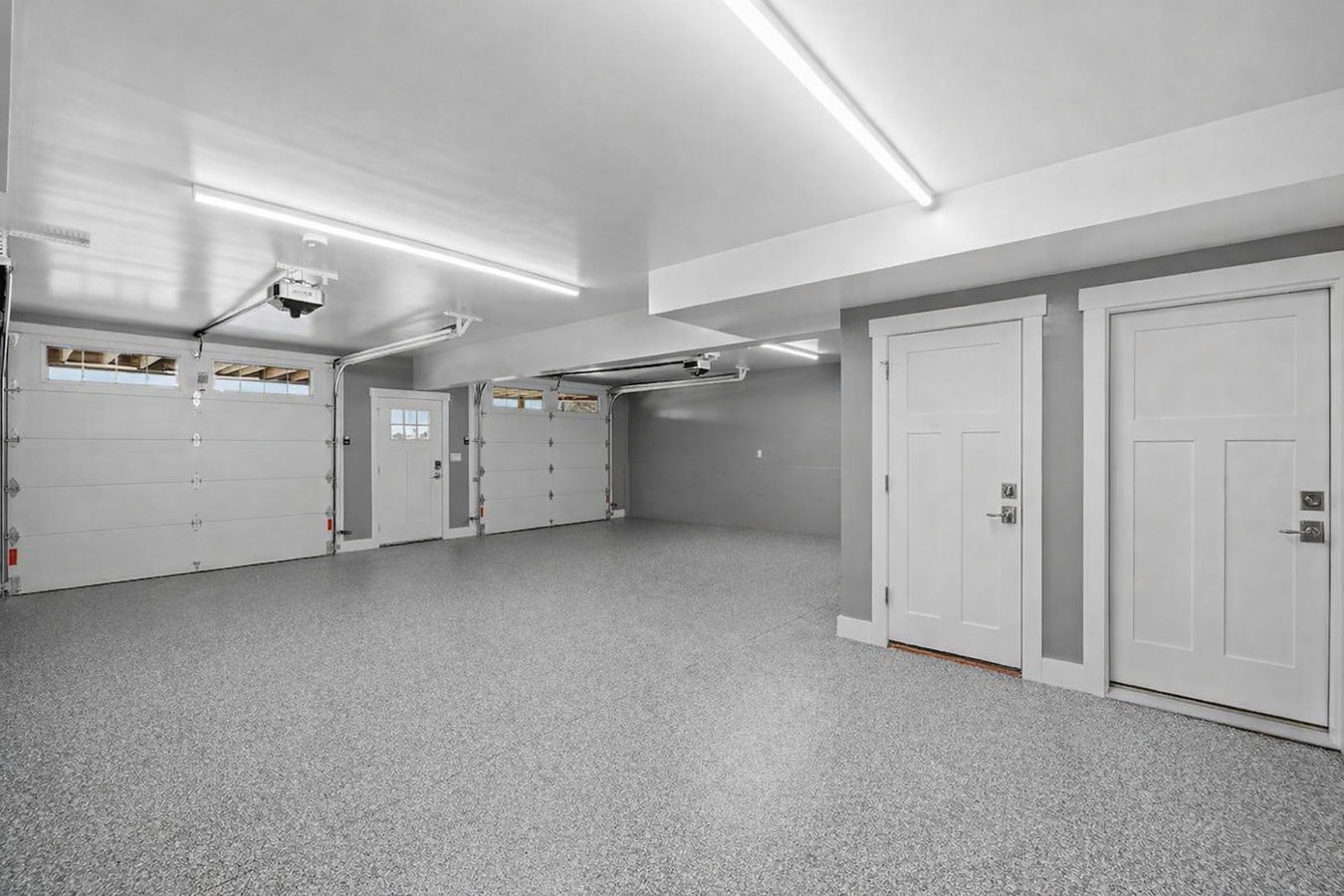
Cracking, flaking, or sunken in spots? We pour and replace garage floors in Normal with proper base prep and mixes that survive freeze-thaw cycles without failing every spring.
Garage floor concrete in Normal starts with removing the old slab, compacting a gravel base, and pouring fresh concrete at the correct thickness - most two-car garage jobs take one to two days of active work plus about seven days of curing before you can drive on it. Normal Concrete Company has replaced and poured garage floors across McLean County, and every project begins with the base, because that is where most failures start.
Normal sits on clay-heavy glacial soil that expands when wet and shrinks when dry. That movement puts constant pressure on whatever concrete sits on top of it. Combine that soil behavior with the dozens of freeze-thaw cycles central Illinois sees each winter, and you have the main reason garage floors in this area crack, heave, and flake long before they should. Getting the base right is not optional - it is the difference between a floor that lasts 25 years and one that needs attention in five.
If you are also looking at the concrete inside your home, our decorative concrete service covers interior floors with a range of finish options that hold up to daily use while looking far better than plain gray concrete.
If you have noticed cracks in your garage floor that seem a little bigger after each winter, that is the freeze-thaw cycle at work. In Normal's climate, small cracks that go unaddressed let water in, which freezes, expands, and makes the crack worse the following season. A crack you can fit a quarter into is already past the point where patching will hold.
If the top layer of your concrete is peeling away in thin chips - especially near the garage door where road salt and snow melt collect - that is spalling. It happens when moisture and salt compromise the surface layer. Once spalling starts, it spreads, and a floor in that condition is telling you it is near the end of its useful life.
A properly poured floor drains toward the garage door. If you notice puddles sitting in the center or along the back wall after rain or washing the car, the floor has either settled unevenly or was never pitched correctly. Standing water accelerates damage and can seep under the slab, making the soil problem underneath worse over time.
Many Normal homes built in the 1950s through 1970s have garage floors that were poured thinner than what is standard today. If your home is from that era and the floor has never been replaced, it has likely been through 40 to 50 winters of freeze-thaw stress. Even if it looks okay on the surface, it may have lost enough integrity that replacement makes more sense than continued patching.
Every garage floor project starts with a full site assessment to evaluate what is there now and what the ground underneath looks like. We handle demolition and hauling of the old slab, grading and compaction of the gravel base, forming the edges, pouring the concrete, and finishing with a broom texture that gives you traction without being rough underfoot. Standard residential garage floors are poured at four inches thick. For heavier use - trucks, equipment, or multiple daily vehicles - we recommend five to six inches, which holds up better over time and adds only modest cost per square foot.
After the pour cures, we can apply a penetrating sealer that protects against road salt and moisture. We also offer upgraded finishes through our decorative concrete service if you want something beyond plain gray, and we can coordinate with our concrete floor installation work if your project extends beyond the garage into a utility space or workshop area.
Ideal for homeowners replacing an aging slab who want a durable, properly pitched floor without decorative extras.
Best for garages where trucks, trailers, or heavy equipment are regularly parked - extra thickness reduces long-term cracking risk.
Suitable for homes with a garage that was built without a finished floor, or where a dirt or gravel floor is being replaced for the first time.
For homeowners who want a floor that resists oil stains and salt damage - sealed concrete is especially practical in Normal's road-salt winters.
Normal sees temperatures swing from well below freezing in January to the 90s in summer. That repeated freeze-thaw stress is the leading cause of garage floor failure in this area. Water seeps into pores, freezes, expands, and chips the surface from the inside out, season after season. Using a concrete mix designed to resist that cycle and applying a sealer before winter are not extras here - they are the baseline for a floor that actually holds up. The American Concrete Institute sets standards for freeze-thaw exposure classifications that guide how concrete is mixed for climates like central Illinois, and we follow those standards on every pour.
Much of McLean County also sits on clay-heavy soil that shifts with moisture and temperature. A garage floor poured without a well-compacted gravel base on this kind of ground will settle unevenly within a few years - a problem we see regularly in homes built before the 1980s across Normal and the surrounding area. We work throughout the region, including homeowners in Bloomington and out toward Pontiac, where the soil conditions and winter climate are much the same.
We respond within 1 business day to schedule a free on-site visit. Estimating a garage floor accurately requires seeing the space and checking the existing slab - we do not quote from photos or descriptions alone.
After the visit you receive an itemized quote covering demo, base prep, pour, finishing, and any sealing. For a full slab replacement, we pull the required Town of Normal building permit on your behalf before any work begins.
We break up and haul away the old concrete, grade and compact the gravel base, set forms, and pour. For a standard two-car garage, the pour itself usually takes a few hours. The crew finishes the surface and cuts control joints before leaving.
Plan to stay off the floor for 24 to 48 hours and keep vehicles out for at least seven days. The Town of Normal inspector will sign off on the permit during the curing window. Once that is done, the floor is ready for full use.
Free written estimate. No pressure. We respond within 1 business day.
(309) 791-9230Clay-heavy soil is the leading cause of slab settlement in this area. We add and compact gravel base specifically for this ground - not a one-size approach. That means your floor stays level through wet springs and dry summers.
The Town of Normal requires a permit for full slab replacements. We apply for it and schedule the inspection - you do not contact the building department at any point. The paperwork is clean when you go to sell the home.
Road salt tracked in from Illinois winters is one of the fastest ways to damage a new garage floor. We apply a penetrating sealer that creates a barrier against salt and moisture without changing how the floor looks or feels underfoot.
Not every concrete mix handles the repeated temperature swings central Illinois sees. We use mixes suited to cold-weather conditions - a standard the American Concrete Institute outlines for climates like ours - so the floor holds up rather than flaking within a few winters.
Every one of these points comes down to one thing: we do the work correctly the first time so you are not calling anyone back in three years. That is what homeowners in Normal deserve from a concrete contractor.
Stamped, stained, or polished finishes that turn a plain gray surface into something that actually looks like a choice.
Learn moreInterior concrete floors for workshops, utility spaces, and unfinished areas beyond the garage.
Learn moreCrews book up fast in spring - reach out now to lock in your project date before the season fills.